Fresno in July is not for the faint of heart, but it might be exactly what you’re looking for.
Here’s the thing.
Most people hear “100 degrees” and immediately cross Fresno off their summer list.
That’s a mistake.
Because if you understand how this city works in July, you can have brilliant weather, zero rain, endless sunshine, and evenings that feel like a warm hug instead of a furnace.
I’ve spent enough July days in the San Joaquin Valley to know exactly when to be outside, when to hide, and when the city actually comes alive.
So grab a cold drink.
Let me walk you through everything.
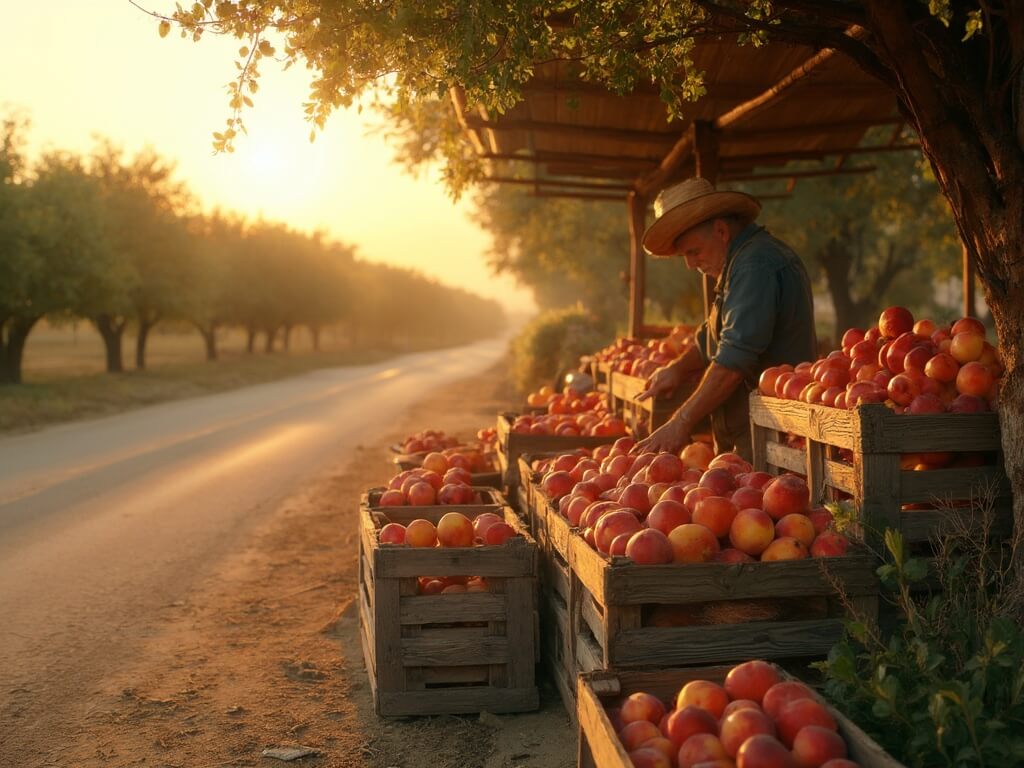
The One Fact About Fresno’s July Weather That Changes How You Plan Everything
July is the hottest month of the year in Fresno.
Not one of the hottest.
The hottest.
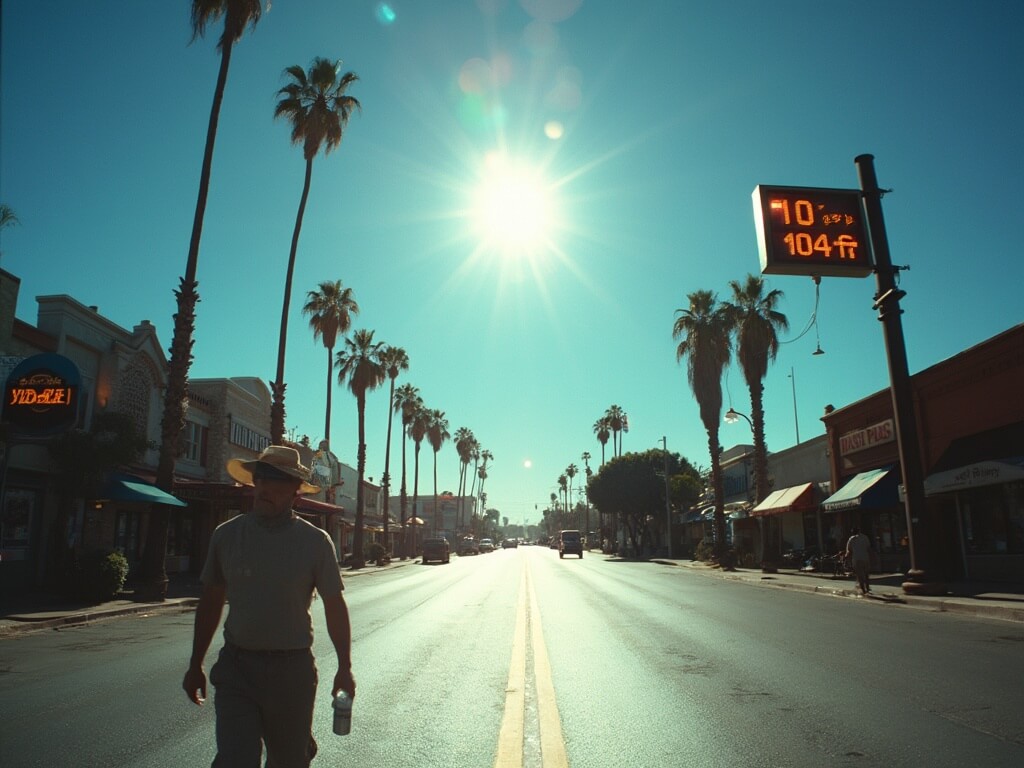
Average highs sit around 98–102°F (37–39°C), and during heat waves, the mercury can push past 105°F, sometimes even brushing 110–112°F on record-breaking days.
But here’s what most weather summaries won’t tell you.
The nights are a completely different story.
Lows drop to a genuinely pleasant 68–73°F (20–23°C).
That’s a swing of 25–30 degrees between afternoon and midnight.
Why does that matter?
Because it means Fresno in July is really two cities:
- Daytime Fresno: an oven you plan around
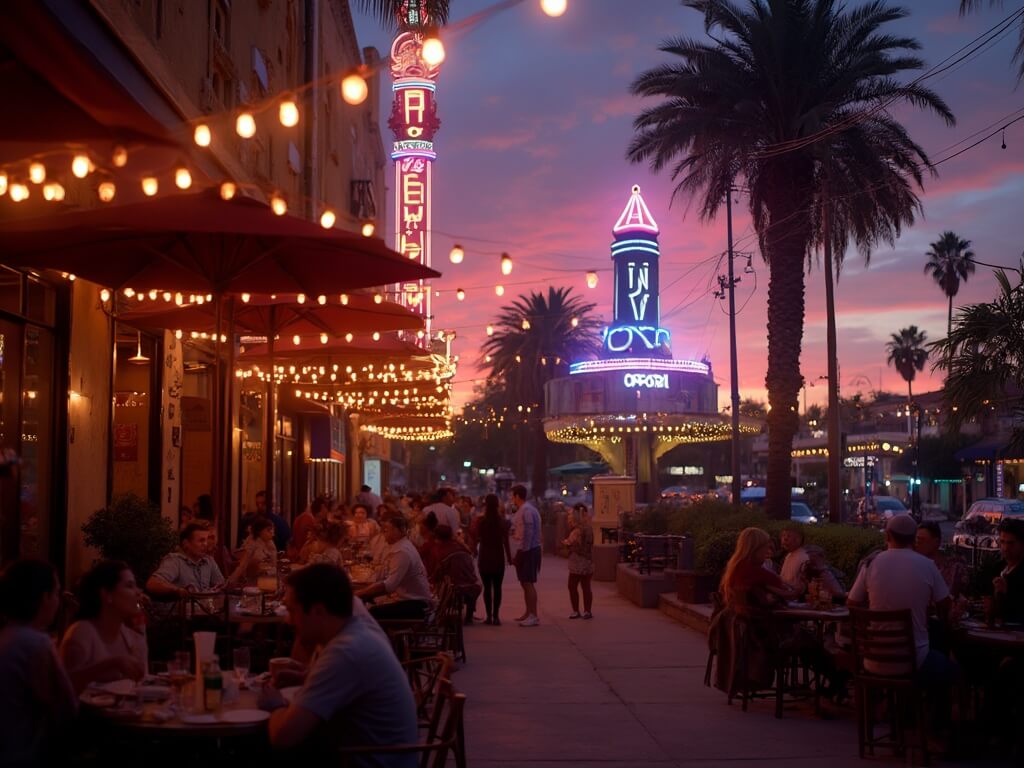
- Evening Fresno: warm, golden, and perfect for being outdoors
And the rain?
Forget about it.
July precipitation averages a laughable 0.01–0.03 inches for the entire month.
Most Julys record zero measurable rain days.
Zero.
If you’re planning a wedding, a road trip, or any outdoor event, there is arguably no month in America with more reliable weather than a Fresno July.
Key takeaway: Brutal afternoons, lovely evenings, and a near-zero chance of rain. Plan accordingly and July becomes an asset, not a problem.
Why Fresno Gets So Hot (And Why the Coast Can’t Save You)
Ever wondered why San Francisco can be 65°F while Fresno is pushing 102°F on the exact same day?
Geography.
Fresno sits smack in the middle of California’s San Joaquin Valley, a huge inland bowl walled off from the Pacific.
That distance from the coast means the cool marine air that keeps coastal California mild simply doesn’t reach the valley floor in summer.
Instead, you get:
- Strong, persistent heat trapped in the valley
- Bone-dry summers with almost no cloud cover
- Long stretches of stable, predictable weather
But this same climate is exactly why the region is one of the most productive agricultural areas on Earth.
Drive twenty minutes in any direction in July and you’ll pass orchards heaving with peaches, plums, and nectarines at peak season.
The fruit stands along the country roads outside Fresno in mid-July are, frankly, one of the most underrated food experiences in California.
Key takeaway: The valley’s geography creates the heat, but it also creates the fruit. You can’t have one without the other.
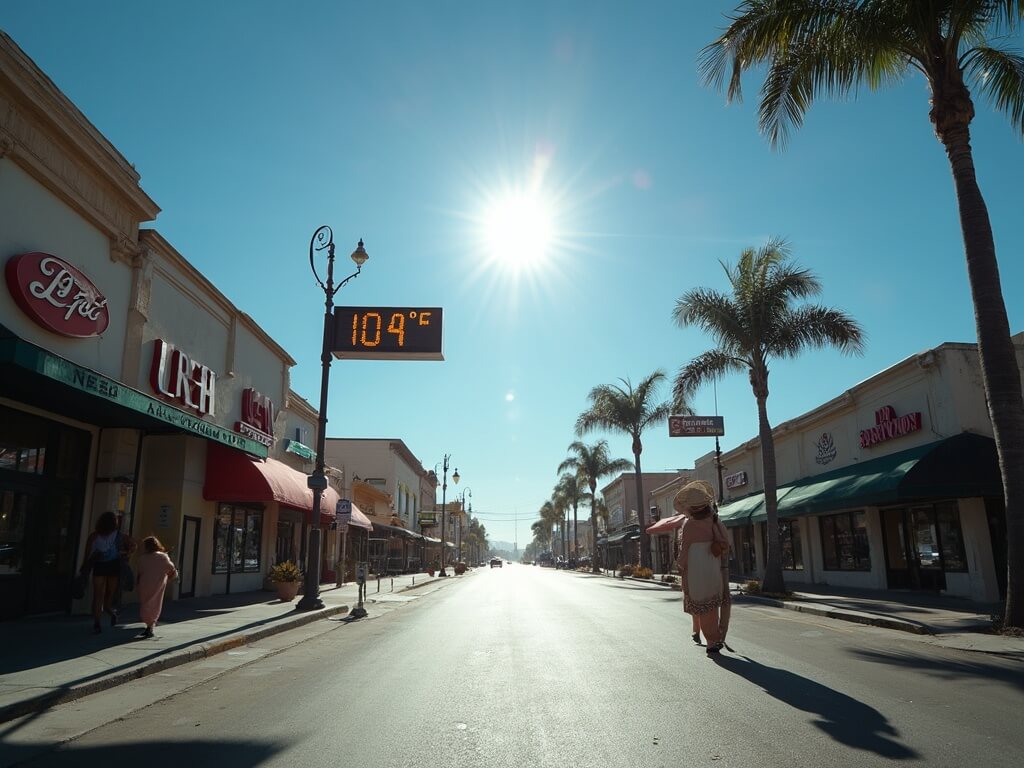
The Sun in Fresno Hits Different (Here’s Proof)
Let’s talk numbers, because they’re genuinely staggering.
In July, Fresno gets:
- Roughly 14 to 14.5 hours of daylight, with sunrise around 5:45–5:55 AM and sunset near 8:10–8:20 PM
- About 96% of possible sunshine, meaning clouds are almost mythical
- A UV index of 10–11 at midday, which sits in the “very high to extreme” category
- Around 8.3 kWh/m² of daily solar energy, nearly constant all month
That UV figure deserves a second look.
At an index of 10–11, unprotected skin can burn in under 10–15 minutes.
Fifteen minutes.
That’s less time than it takes to queue for an ice cream.
Here’s my honest confession.
A few summers back, I spent a July morning at a farm stand east of Fresno, picking up peaches and chatting with the grower.
I’d slathered sunscreen on my face and arms but completely forgot the back of my neck.
I was outside for maybe forty minutes, most of it before 10 AM.
By that evening, I had a burn stripe across my neck that stung for three days and peeled for a week.
Morning sun. Forty minutes. Proper sunburn.
That taught me more about Fresno’s July UV than any weather chart ever could.
So take this seriously:
- Broad-spectrum, high-SPF sunscreen on every exposed bit of skin
- A proper hat, not a token cap
- Sunglasses, because the glare is relentless
- Reapply, especially if you’re sweating or swimming
Key takeaway: Fresno’s July sun burns fast, even in the morning. Protect yourself like a local, not a tourist.
The “Dry Heat” Myth: Is 100°F in Fresno Really More Bearable?
You’ve heard the phrase a thousand times.
“But it’s a dry heat.”
Is it actually true, or is it just something people say to feel better?
Honestly? Both.
Fresno’s July humidity typically sits between 25–36%, with dew points down in the low 50s°F.
Compare that with somewhere like Houston, where 91°F can feel like a wet towel wrapped around your face, and yes, Fresno’s 100°F is genuinely more tolerable.
Your sweat evaporates quickly, which cools you efficiently.
A steady breeze of 10–11 mph helps too.
But here’s the trap, and it catches visitors constantly.
Because your sweat dries so fast, you don’t realise how much water you’re losing.
Dry heat doesn’t feel as oppressive, so people push harder, drink less, and end up dizzy in a car park at 3 PM wondering what happened.
The fix is simple:
- Drink water before you feel thirsty — thirst lags behind dehydration in dry climates
- Carry a refillable bottle everywhere — locals do
- Watch older adults and kids closely — they dehydrate faster and complain later
As the National Weather Service repeatedly stresses during Central Valley heat events, heat is the deadliest weather hazard in the United States, killing more people annually than floods, tornadoes, or hurricanes.
Dry or not, 100°F demands respect.
Key takeaway: Dry heat feels easier but dehydrates you faster. Drink water constantly, even when you don’t feel like it.
Heat Waves: When Fresno’s July Goes From Hot to “Stay Inside”
An ordinary July day in Fresno is hot.
A heat wave is something else entirely.
Early July is statistically the warmest stretch of the year, with highs commonly parked at 101–102°F.
During proper heat waves, triple-digit temperatures can persist for days or even weeks at a time.
The climatology here is remarkable: Fresno averages around 38 days per year at or above 100°F and roughly 113 days at or above 90°F, with July and August hoovering up most of those.
So what do you actually do about it?
Locals follow an unspoken playbook:
- Mornings are golden — errands, exercise, and outdoor jobs happen before 10 AM
- Midday belongs to air conditioning — shops, museums, cinemas, home
- Evenings are for living — dinners outside, walks, events after 7 PM
And in fairness, not every July is a scorcher.
July 2025 was one of Fresno’s coolest in decades, ranking 31st coolest out of 45 years of records, with just five triple-digit days and temperatures about 1.7°F below the 30-year norm.
So while you should plan for heat, don’t assume every day will be biblical.
Some Julys are downright merciful.
Key takeaway: Expect heat waves, structure your day around them, and treat any cooler-than-normal July as a bonus.
Air Quality: The Question Smart Visitors Actually Ask
Here’s a question most Fresno travel guides dodge.
“What about the air?”
Fair question, and it deserves an honest answer.
The Central Valley’s summer can bring air quality challenges.
Heat and stagnant air can cook up ozone, and regional wildfires in the surrounding mountains occasionally push smoke and haze into the valley.
Agricultural activity adds its own particulates to the mix.
On a clear July day, visibility stretches to around 10 miles and the skies are gloriously blue.
On a smoky one, you’ll notice the difference immediately.
Two quick tips:
- Check the AQI before outdoor exercise, especially if you have asthma or respiratory issues
- Don’t confuse summer haze with tule fog — that famous valley fog is strictly a winter phenomenon and completely absent in July
The good news?
Most July days are clear, and the sunshine percentage sits near 96% of what’s astronomically possible.
Key takeaway: Air quality is usually fine but worth a daily check, particularly during wildfire season.
When Locals Actually Go Outside (Steal This Schedule)
Want to know the single biggest difference between visitors who love Fresno in July and those who leave grumbling?
Timing.
Fresno in July rewards people who move like locals.
Here’s the rhythm:
Early morning (6–10 AM):
- Walks, runs, and hikes while it’s still 70-something
- Farm stand runs before the fruit sits in the heat
- Departures for Yosemite or Sequoia–Kings Canyon, where higher elevations knock 15–25 degrees off the valley temperature
Midday (11 AM–5 PM):
- Water parks, pools, and lake trips
- Museums, galleries, and anywhere with aggressive air conditioning
- The classic long lunch that mysteriously stretches to 3 PM
Evening (6 PM onwards):
- Outdoor dining as temperatures slide into the 80s and 90s
- Concerts and live shows — venues like the Tower Theatre host live music and tribute acts on July evenings
- Community events in nearby towns, like Kingsburg’s Summer Band Concerts Under the Stars
Even the farming community runs on this clock.
Irrigation and field work happen in the early morning or at night, because nobody with sense works a field at 2 PM in July.
Schools are out, families adapt, and the whole city breathes to this rhythm of early starts, sheltered afternoons, and long, warm evenings.
Once you sync with it, July in Fresno stops feeling like an endurance test and starts feeling like a proper summer.
And that’s before we’ve even touched on what to pack, whether July beats August, and the surprisingly common mix-up between Fresno, California and its Texan namesake.
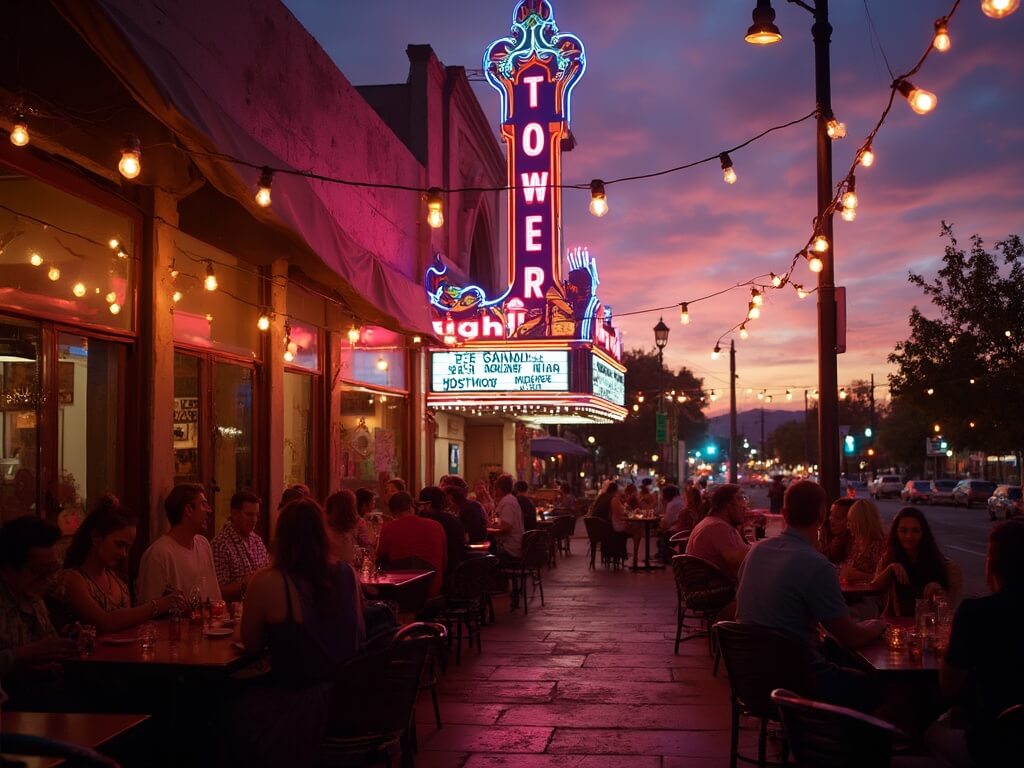
For more details and related guides, see Fresno in July and the extended notes at Fresno in July — Part 2.
Your Fresno July Packing List (What I Actually Bring)
Let’s get practical.
Packing for Fresno in July is beautifully simple, because the weather refuses to surprise you.
No rain jacket.
No umbrella.
No “just in case” jumper for daytime.
Here’s what actually earns its place in the bag:
Clothing:
- Light, breathable fabrics — shorts, t-shirts, sleeveless tops, linen if you’re fancy
- Sun-protective clothing — a lightweight long-sleeve UPF shirt sounds counterintuitive but works brilliantly at midday
- One light layer — not for outside, but for restaurants and cinemas that run their air conditioning like meat lockers
That last one catches people off guard.
You’ll be sweating on the pavement and shivering in the supermarket ten minutes later.
Sun and heat gear:
- Wide-brimmed hat — remember my neck? Learn from my neck
- Sunglasses with proper UV protection
- High-SPF broad-spectrum sunscreen, and enough to reapply
- A refillable water bottle — non-negotiable
- Optional extras: cooling towels, a small handheld fan, electrolyte tablets if you’re doing anything active
That’s it.
The whole list fits in a carry-on with room to spare.
Key takeaway:
Pack light, pack sun-smart, and bring one layer for arctic-grade air conditioning. Skip anything rain-related entirely.
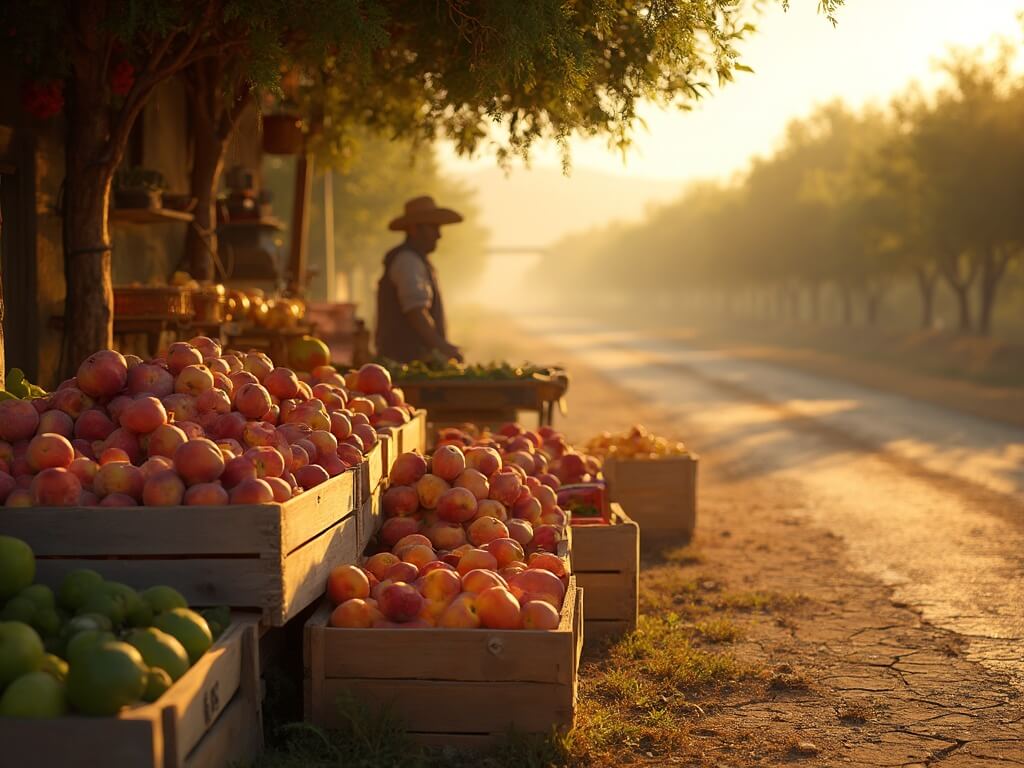
Should You Actually Visit Fresno in July? The Honest Pros and Cons
Let me give you the straight answer nobody in a tourism brochure will.
It depends entirely on who you are and how you travel.
The case FOR July:
- Weather certainty that borders on absurd — zero rain days most years means outdoor plans never get cancelled
- 14+ hours of daylight — you can sightsee from 6 AM to 8 PM and still catch a sunset
- Peak fruit season — the stone fruit coming out of the surrounding orchards in July is genuinely world-class
- A full events calendar — concerts, theatre, comedy, and sports, especially in the latter half of the month
- Gateway access — Fresno is the launching pad for Yosemite and Sequoia–Kings Canyon, both spectacular in July
The case AGAINST July:
- Persistent, sometimes extreme heat — triple digits can and do stack up for days
- Midday outdoor activity is essentially off the table — if hiking at noon is your thing, come in April or October instead
- Potential air quality dips during wildfire or stagnant-air episodes
- Higher cooling costs if you’re staying long-term or renting a place
Here’s my honest read.
If you’re heat-sensitive, travelling with anyone frail, or dreaming of all-day outdoor adventures at valley level, September or October will treat you far better.
But if you want guaranteed sun, evening entertainment, mountain day trips, and the best peaches of your life?
July delivers.
Key takeaway:
July is brilliant for flexible, heat-savvy travellers and rough on anyone who insists on midday outdoor plans.
July vs. June vs. August: Which Summer Month Wins?
People ask me this constantly, so let’s settle it.
July vs. June:
June is warm but noticeably gentler.
July is hotter, drier, and more consistent — it’s the peak of the heat season, full stop.
If you want summer with training wheels, pick June.
July vs. August:
Statistically, they’re near-twins.
Both months dominate Fresno’s tally of 100°F days.
The subtle differences: July has slightly longer days (though day length shrinks by about 36 minutes over the month), while August can carry a higher wildfire smoke risk as the fire season matures.
July vs. spring and fall:
No contest for comfort.
April–May and September–October offer mild temperatures and are objectively better for daytime outdoor tourism.
But they can’t match July’s rain-proof reliability or its fruit.
And the winter comparison?
Almost comical.
July delivers sunshine during roughly 96% of possible daylight hours.
December brings clouds, rain, and the valley’s infamous tule fog.
They’re barely the same city.
Key takeaway:
July is the heat champion, August is its twin, June is the softer entry point, and spring or fall win for pure comfort.
Wait — Which Fresno Are We Talking About?
Here’s a mix-up I’ve seen trip people up more than once.
There are two Fresnos.
Fresno, California — the big one, the San Joaquin Valley city with July highs of 97–102°F, bone-dry air, and lows around 66–68°F.
Fresno, Texas — a small community near Houston, where July highs sit closer to 91°F but with muggy nights around 73°F and a completely different rainfall pattern.
A friend of mine once spent twenty minutes confused about why her weather app showed afternoon thunderstorms for “Fresno in July” before realising she’d saved the Texas one.
If you’re reading climate data or booking travel, double-check the state.
Nearly all “Fresno in July” travel content — including this article — refers to Fresno, California, the city with the deep climate records and the actual tourism scene.
Key takeaway:
California’s Fresno is dry heat; Texas’s Fresno is humid heat. Know which one you’re planning for.
The Questions Everyone Asks Before Visiting (Rapid-Fire Answers)
Let me clear up the most common questions in one go.
“How hot does it actually get?”
Typical highs of 98–102°F, with heat wave spikes above 105°F.
Nights cool to 68–73°F and rarely dip below the low 60s.
For long-term averages and hourly breakdowns, see Average Weather in July in Fresno California.
“Does it rain at all?”
Practically never.
Most Julys log zero measurable rain days and 0.01–0.03 inches total.
Any shower that sneaks through is brief and barely worth mentioning.
For detailed climate and precipitation averages, check Fresno Climate and Weather Averages.
“Is July a good time to visit?”
Yes, if you want guaranteed sun, long days, evening events, and water-based fun.
No, if you’re heat-sensitive or want extended midday hiking at valley level.
“What’s the biggest danger?”
Heat and sun, without question.
Hydrate constantly, avoid strenuous midday activity, use serious sun protection, and know where cooling centres are during extreme heat alerts.
The National Weather Service doesn’t issue Excessive Heat Warnings for the Central Valley lightly — when they do, take them at face value.
“Can I still do things outdoors?”
Absolutely.
Early morning walks and runs, evening concerts, pools and lakes at midday, and mountain day trips where elevation does the cooling for you.
Key takeaway:
Hot, dry, sunny, and completely manageable if you respect the heat and time your days properly.
The Bottom Line: How to Win at Fresno in July
Let me pull this all together.
Fresno in July is not a city you fight.
It’s a city you sync with.
The formula is genuinely simple:
- Mornings for movement — walks, farm stands, park departures before 10 AM
- Middays for shelter — water, air conditioning, long lunches
- Evenings for everything else — dinners, concerts, warm golden hours that stretch past 8 PM
- Water and sunscreen always — the dry heat lies to you, and the UV doesn’t negotiate
Do that, and you get one of the most reliable summer destinations in America.
No rain checks.
No cancelled plans.
Just fourteen hours of daylight, peaches that taste like they were invented yesterday, and evenings warm enough to sit outside until midnight.
I’ve watched visitors arrive sceptical and leave converted, usually somewhere around their first 8 PM patio dinner when the temperature finally drops into that perfect low-80s sweet spot and the whole city exhales.
That’s the moment they get it.
The heat isn’t the story.
The rhythm is.
So if you’re weighing up a summer trip, don’t let a scary number on a weather app make the decision for you.
Plan smart, pack light, drink water like it’s your job, and you’ll discover what locals have always known about Fresno in July.
Related reading and quick links
- Fresno in August: Weather & Travel Guide
- Fresno in June: What to Expect
- Fun Things to Do in Fresno, California
- Free Things to Do in Fresno
- What California Is Like in July
Further reference:
Average Weather in July in Fresno California · Fresno Climate and Weather Averages