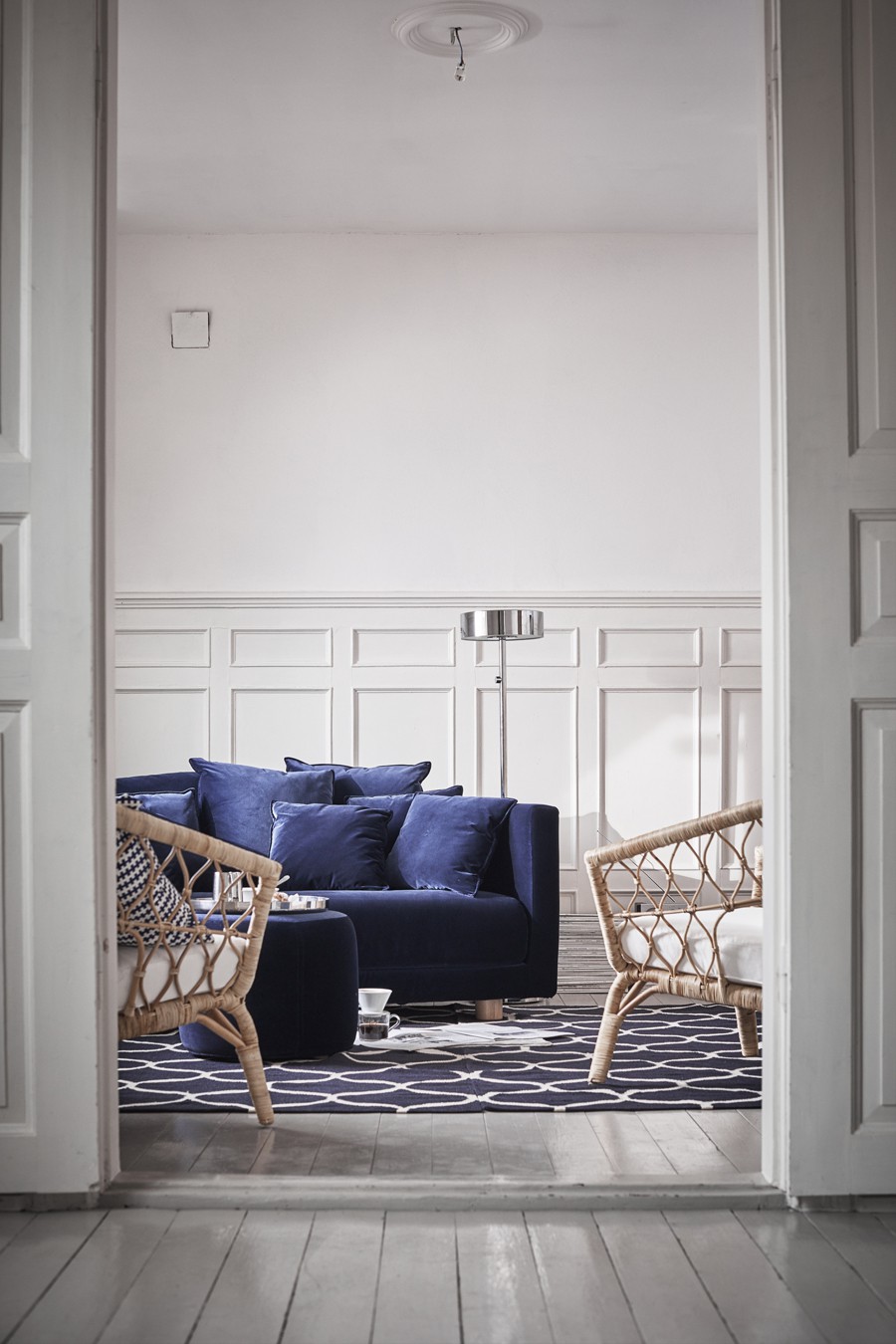
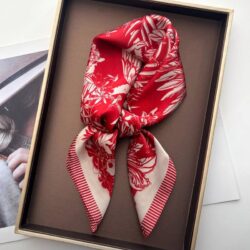
Handwoven in Ukraine, Spain and Portugal to her drawings, the pieces sit somewhere between artwork and interior object, and she’s in no hurry to decide which.
Why handwoven textiles? What drew you to this as your medium? Textiles were always around me, even before I consciously chose them as a medium. My mother had a vintage store in Wānaka before I was born, and our home was filled with antique garments and textiles she had left over from that time. I think that shaped my sensibility around textiles, which was reinforced growing up with the carpets and furnishings from my parents’ flooring shop. I started my career in fashion as a stylist and consultant, later moving into art, working in galleries and fabricating textile works for artists. Every iteration of my career was connected in one way or another to textiles, and I knew when I started my own project that this would be the departure point.

What is it about wool in particular? What does it give the pieces you make? I love wool because it has such a strong physical presence. It’s both resilient and nurturing, and it has an intimacy I don’t think synthetic materials can replicate. There’s something about natural fibres that makes you aware of their origin and the labour involved in transforming them. Wool has such textural versatility. It can be dense, raw, soft, rough, smooth or furry, depending on how it’s woven, treated and finished. I’m interested in that diversity, and in how much the character of the material can affect the final work.


What other fibres and materials are you working with? I work a lot with mohair, which is an incredible fibre. It has a beautiful lustre and is very warm, while remaining lightweight. I also work with silk, chiffon and linen as well as antique and vintage fabrics and garments in some of my more experimental pieces.
Colour and pattern both play a key part. What informs the way they come together in each piece? A lot of it is intuitive, although there’s usually a long period of research behind the work before I begin designing. I have an archive of motifs I’ve developed over time, and part of my practice has been exploring how I can disrupt, distort and evolve them rather than repeating them literally. Colour develops alongside that process, rather than starting from a fixed palette. It has a strong influence on how the geometric motifs read, so I adjust the relationships between colour, proportion and rhythm as the work evolves.


Who are the artisans you collaborate with, and what does each of them bring to the pieces? I’m currently working with several groups of artisans, all specialising in different techniques. The pieces made in Ukraine have a brushed furry nap and are versatile; they can be used as a rug, blanket or wall hanging. I’ve been making mohair throws in Spain for six years and I’m launching new pieces later this year. The blankets made in Portugal are woven and then felted, giving a curly textured surface, and I’m customising and finishing those by hand. Through these collaborations I’ve learned a huge amount from the artisans about the possibilities and limitations of each technique. I’m bringing my own visual language to the work, but the final pieces are always shaped by their knowledge and interpretation, too.

It feels like the pieces you design sit at the intersection of art and interior object. What’s it like working in that space? I’m comfortable with that ambiguity and don’t feel a strong need to decide whether something is an artwork or a design object while I’m making it. It’s interesting to let the setting contextualise the piece, whether that’s in an exhibition space, where it’s often encountered in a more conceptual way, or in a domestic setting, where it becomes part of everyday life.
Where will we see your work next? I have a couple of Europe-based exhibitions I’m working on, and everything will be made for these shows, including new furniture works I’m excited about. I’ll also be sharing new printed mohair pieces, and of course more wool works.


Hopping across the ditch to Sydney and on to the Northern Hemisphere is a rite of passage plenty of New Zealanders take. What have you learnt about yourself from making a life away from home, and what’s kept you in Paris? I always knew I would leave Aotearoa, at least for a time, and moving away taught me that home doesn’t have to be geographical. I’ve lived in Sydney, London, Paris and New York, and spent long periods travelling between cities for work. I first came to Paris through fashion and stayed because it gradually began to feel like home. I love that for a major city there are still places to find quiet and retreat, and it’s been an incredible place to build my practice.
Walk us through an ordinary day. How do you structure your creative time? There isn’t really an ordinary day, because my work changes depending on what stage a project is at. Ideally I like to begin with some reading before moving into more focused studio work. When I’m designing, I can spend long stretches drawing and refining motifs or making maquettes.
When I’m making something by hand, the day becomes much more physical and the work follows the flow of my energy. Sometimes that means working extremely early in the morning, or very late at night. I function best when I have flexibility in my practice, allowing for changes in rhythm. I try to protect periods of uninterrupted time, because the work develops much better when I’m not constantly switching between creative and administrative tasks.
Are there rituals you’d be lost without? Reading, definitely. I need periods of quiet where I’m not consuming lots of visual information. Walking is another. I walk a lot in Paris, and looking at architecture and small details, without specifically trying to find inspiration, is often when ideas begin to form. Music is a constant part of my life too, and often becomes intertwined with particular periods of making or research.
You’ve spent most of your adulthood living abroad. What did growing up in Aotearoa give you? I’m immensely grateful to have grown up in Aotearoa. I was born and grew up in Timaru, but spent much of my childhood in Wānaka.
The extreme isolation, relative to the rest of the world, was protective and nourishing to my imagination. Being constantly in a natural environment, seeing the mountains and the ocean every day, instilled in me a deep appreciation of the beauty of nature, and in a more abstract way that connection continues to influence the way I approach texture and space. In some ways it was that same isolation that led me to leave, but I value having experienced both sides of that contrast, and Aotearoa will always be home.
graceatkinson.com
Interview Alice Lines
Photography Biddi Rowley
The post Expat New Zealander Grace Atkinson on weaving from Paris appeared first on Homestyle.