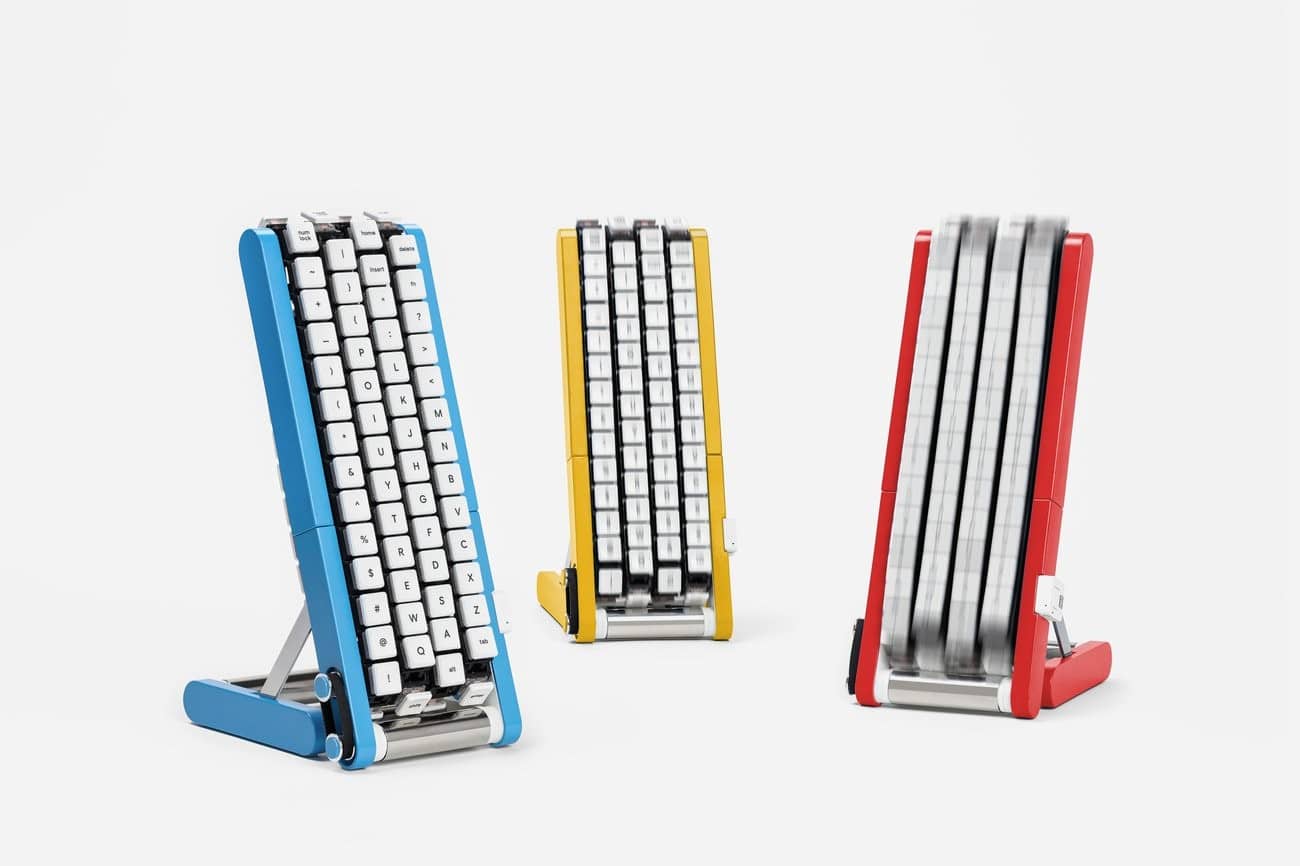
Four rows of keys glide past the fingertips like sushi plates on a kaitenzushi counter. Nothing on the desk moves except the keyboard itself: small white keycaps riding on looping belts, rounding the ends and coming back again, waiting for a finger to stop them.
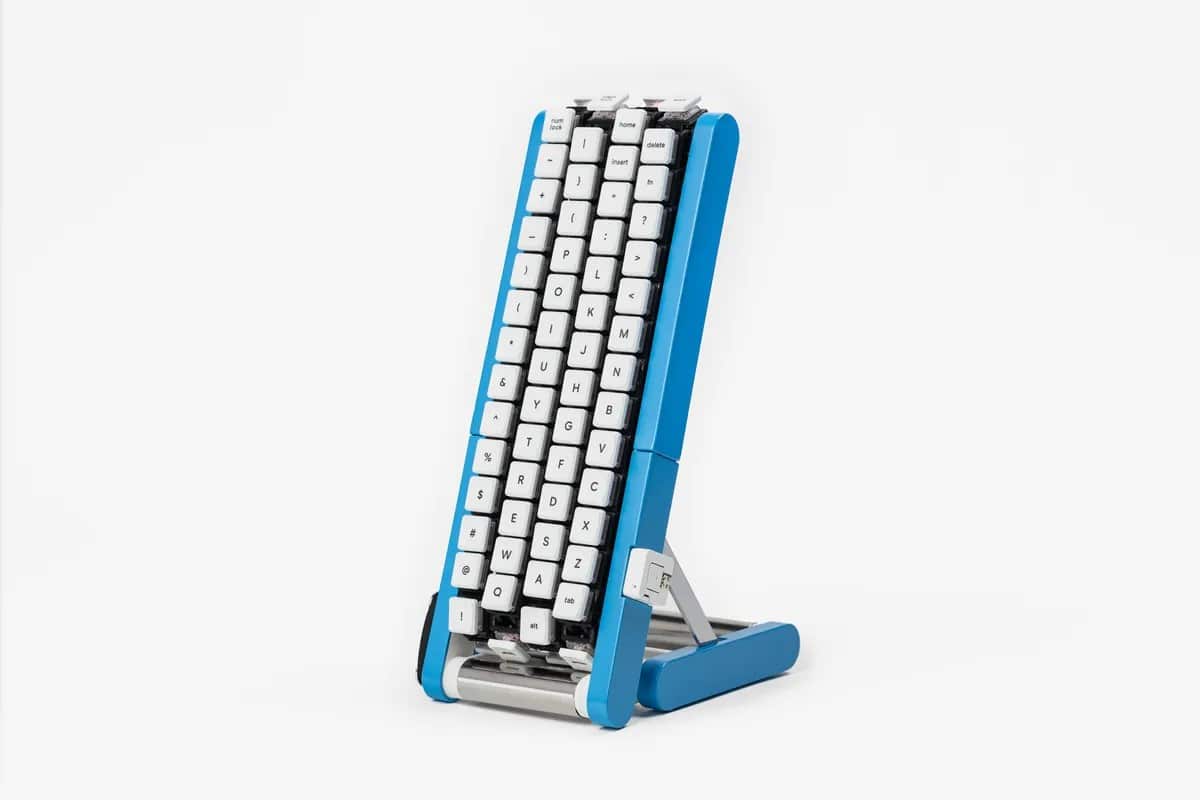
This is the Gboard Kurukuru Version, presented by Google Japan’s Gboard team on October 1. Kurukuru is the Japanese onomatopoeia for something that spins round and round, and the name is the whole idea. A conventional keyboard assumes two hands that travel across a fixed grid. Here the logic is inverted: the arm stays still and the keys come to it. Each of the four belts carries 29 keys, and since uppercase and lowercase letters have keys of their own, there is no Shift key at all. You simply wait for the right character and press it as it passes.
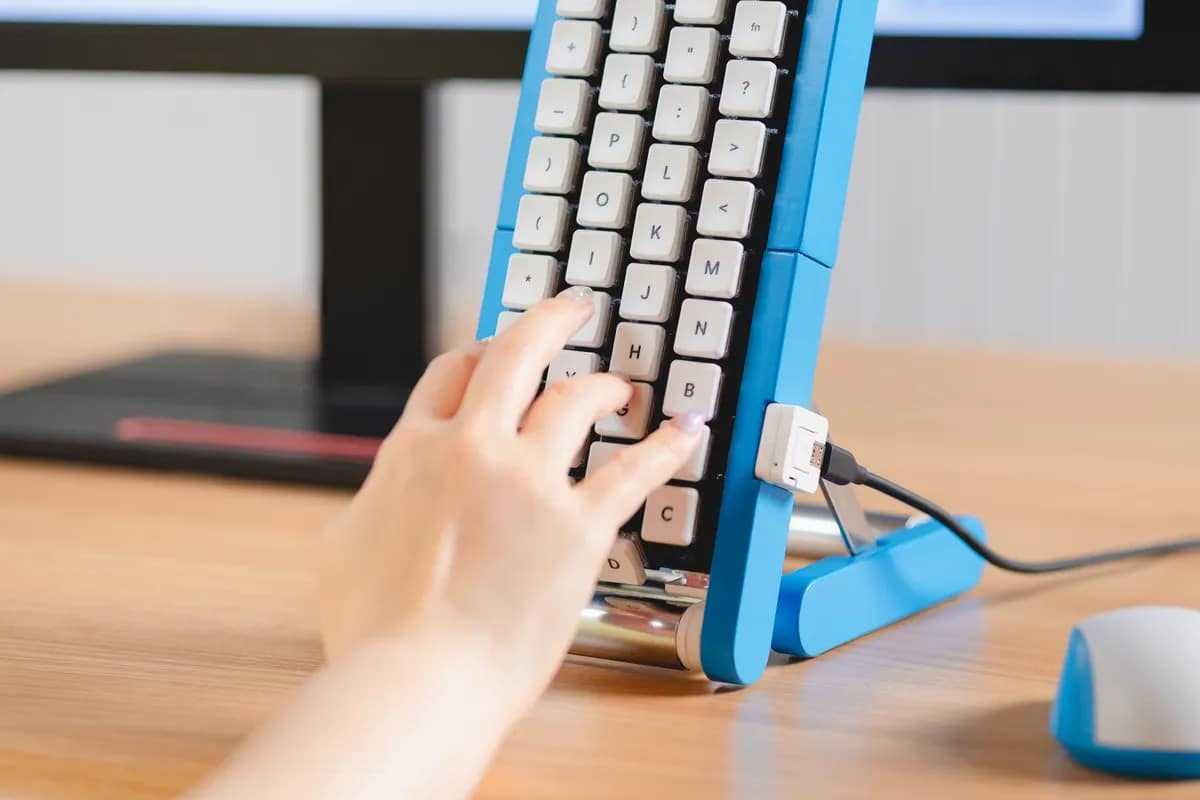
The team presents it with a straight face, which is half the point. One hand stays free for a cup of tea or the mouse. Two units side by side would, in theory, allow two-handed typing. A high-speed mode, where characters rush past, is pitched as training for dynamic visual acuity. A voice guide reads incoming letters aloud. Software engineer Megumi Yamada cites rotating character stamps as the starting reference.
It is the fifteenth entry in a series Google Japan has run since 2010, when a drum-shaped version of its Japanese input software opened the tradition. The early ones came out on April Fools’ Day. They now arrive on October 1, a nod to 10/1 and the 101-key layout that became the standard PC keyboard. Last year’s proposal was a rotary-dial keyboard.
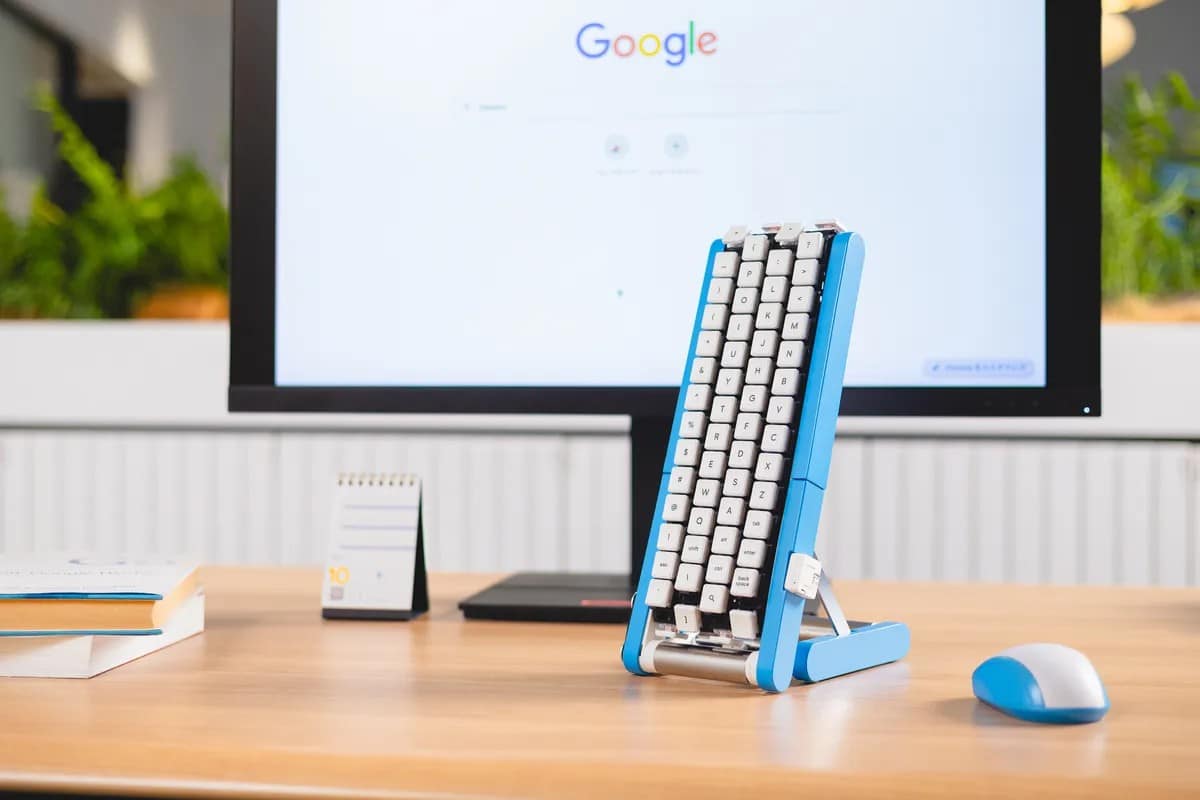
What keeps the series from being a simple prank is that the objects are real. They work, and the design files and firmware are published as open source in Google’s mozc-devices repository on GitHub, so anyone with the patience and a workshop can build one. We find that part the most interesting. By taking a tool so standardised that we no longer see it and making its assumptions physically visible, these keyboards work as small essays on interface design: why the keys sit still, why the hands do the travelling, and what else could have been. The answer, this time, is a conveyor belt. It will not be for sale.
Images courtesy of Google.
Read also: Dot is the first Braille smartwach with a moving keyboard / A Computer with Punching Bags Keyboard | Bless
The post Google made a keyboard where the keys come to you first appeared on Feel Desain | your daily dose of creativity.