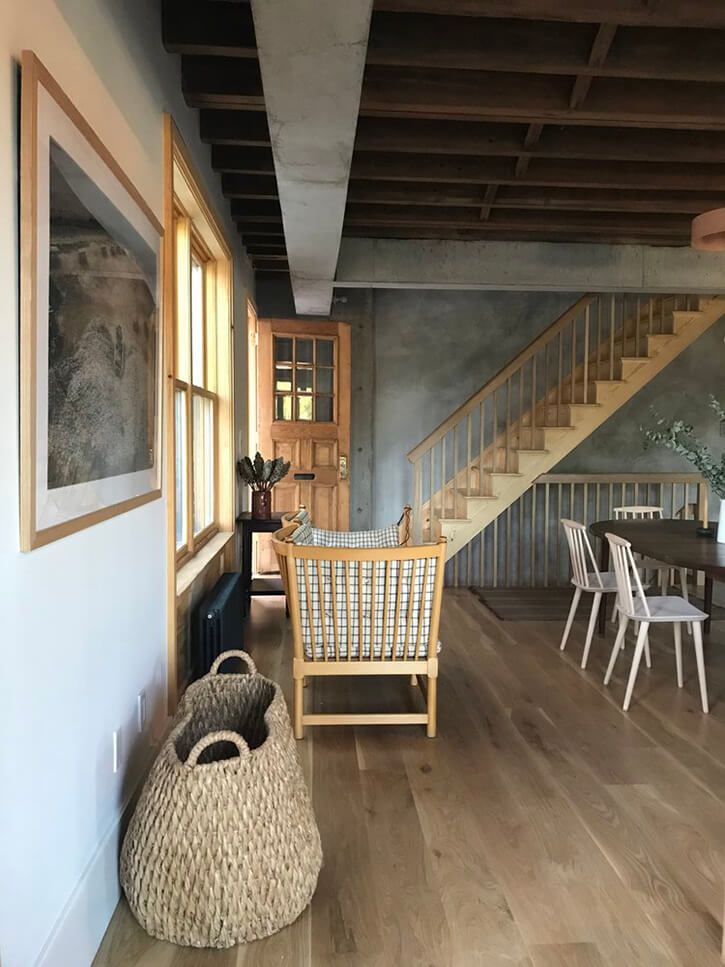
This home carries a confident sense of color, layer by layer, through every room (via Entrance Makleri). What sets it apart is the considered pairing of deep, earthy tones with natural materials, creating spaces that feel both historic in character and inviting.
Forest Green and White Marble Make the Kitchen a Room Worth Lingering In
The forest green cabinetry anchors the kitchen with an earthy depth that feels curated rather than expected. A central island with seating draws the room together, inviting casual gathering alongside the more practical work of cooking. White marble countertops and a tile backsplash keep the palette crisp without losing warmth.

Stainless steel brings an industrial edge to the stove wall, balanced immediately by the warm tone of wooden open shelving above. Ceramics and glassware are arranged with an easy, considered hand, each piece contributing texture and quiet personality. The combination of cool metal and natural wood is one of the kitchen’s most tactile contrasts.

A peg rail beside the stove keeps everyday tools within reach while adding a layer of visual rhythm to the wall. Wooden accessories along the marble counters soften the crispness of the white surface, grounding the space in natural warmth. Small details like these are what make the kitchen feel genuinely lived in.

Grey storage cupboards tucked alongside the kitchen door demonstrate how optimized storage can still look considered. The tonal shift from forest green to grey here reads as intentional, broadening the earthy palette without disrupting it.

Quiet and Layered, the Living Room Holds Its Own Against Bolder Neighbours
Light grey walls and neutral furnishings give the living room a calm, almost meditative quality. An Ikea Ivar cabinet painted to match the wall dissolves into the background, making the room feel more expansive and sculptural in its restraint.

Through the doorway, the green dining room makes its presence known, offering a warm chromatic pull from across the threshold. The contrast between the two rooms feels deliberate, each space more defined by the other’s presence.

Green on Green in the Dining Room Creates an Immersive, Earthy Setting
Green walls meeting green wainscoting wrap the dining room in a cozy, enveloping depth. Against this layered backdrop, the natural oak dining chairs stand out with quiet warmth, their grain and honey tone offering tactile relief.

A pleated pendant lamp in a neutral tone hangs at the center of the room, its soft form holding its own against the rich, tonal green surrounding it. The contrast between the pale lamp and the layered paint tones below creates a welcoming focal point without competing with the walls.

Rattan, Gingham, and Linen Give the Bedroom Its Cozy, Tactile Character
Green grey walls set a restful tone in the bedroom, softened further by the textured warmth of a rattan headboard. A gingham bedspread and green linen curtains layer the space with natural, tactile materials that feel considered rather than accidental.

A white area rug beneath the bed provides a grounding contrast against the deeper tones of the walls and textiles. Its placement draws the eye inward, giving the furniture arrangement a clear, deliberate center.

Charcoal Grey Makes the Hallway the Home’s Most Dramatic First Impression
Charcoal grey walls give the hallway a bold, immersive quality that sets expectations for the color confidence found throughout the home. White doors and a black-and-white tiled floor cut through the darkness with graphic clarity, their contrast feeling historic and deliberate.

Colorful art prints bring an unexpected liveliness to the color-drenched hallway, their warmth sitting comfortably against the deep charcoal backdrop. Rather than fighting the darkness, they lean into it, each print gaining presence from the surrounding depth.

The post A forest green kitchen in a historic home with a sage-green dining room appeared first on COCO LAPINE DESIGN.