Touring EuroCucina 2026, the latest edition of Salone del Mobile’s biannual kitchen exhibition, it was clear that manufacturers were trying out some new recipes. Long seen as the operational heart of the home, the kitchen is often approached as a place where efficiency reigns supreme. The mission: to keep everyone on schedule for the morning commute, and then maybe for evening soccer practice. For a while, that attitude resulted in designs that conveyed reassuring precision through exact detailing and perfectly organized storage drawers. In other words, kitchens were here to perform like well-oiled machines.
Two years ago, EuroCucina carried that line of thinking to its furthest extreme. In 2024, we reported on kitchen after kitchen clad in stainless steel, evoking the back-of-house setups that keep Michelin-starred restaurants running like clockwork. Back then, The Bear was still dominating the Hollywood awards circuit and suddenly, anyone could be Carmy Berzatto! Never mind that he doesn’t make his job seem very enjoyable. Aggressively promoted, then-new A.I. features that automatically calibrated your oven’s settings based on the weight of your Thanksgiving bird felt like another layer of functional oversight from some invisible head chef, dedicated to ensuring optimal results.

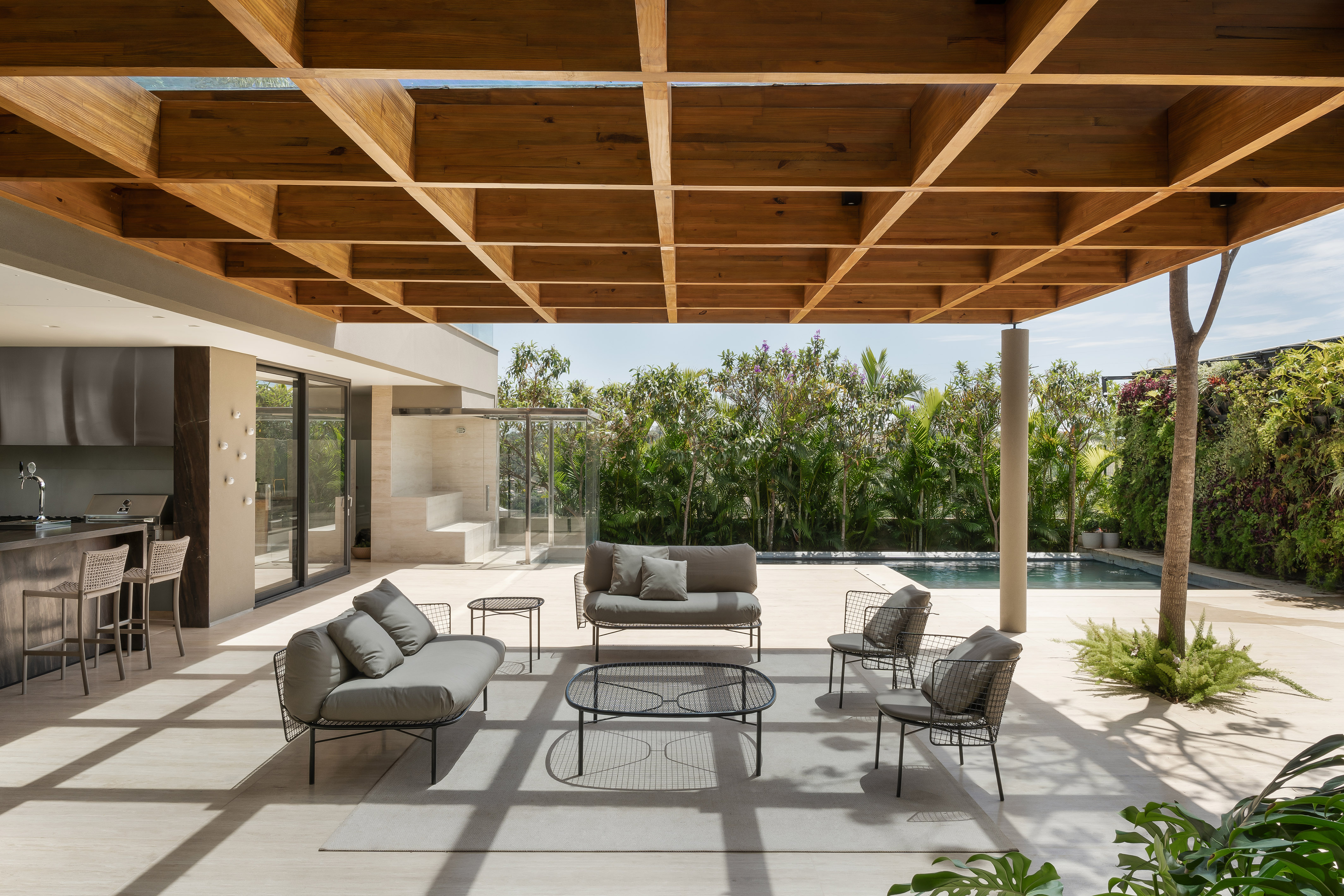
By comparison, this year’s kitchen displays appeared to be taking their cues less from well-ordered epicurean assembly lines, and more from tranquil urban bathhouses. Almost across the board, designs adopted an earthy, elemental material palette. At LG (where the electronics manufacturer also showcased its SKS luxury brand), Copenhagen-based studio GamFratesi contributed a trio of custom setups built from natural stone. The most expressive of the three featured rough edges that maintained some of the material’s raw texture.

At Fisher & Paykel, the New Zealand appliance manufacturer presented another soulfully rugged exploration of materiality and nature, stacking its fridges and ovens into totemic displays clad in tōtara wood veneer with an algorithmically milled pattern that mimicked the look of hand carvings. The title of the booth was “Nature–Ritual,” encouraging visitors to think of cooking as something ceremonial, rather than just another daily chore. Cups of kawakawa tea, panoramic nature photography of Piopiotahi (the Milford Sound) and a birdsong soundtrack added to the serene atmosphere.

Scavolini, meanwhile, sanded away sharp edges with Flair, a new collection that embraces soft, rounded forms and warm wood finishes. The collection’s sculptural showpiece, a cloud-like kitchen island complete with a floating circular breakfast table extension at one end, felt more like a domestic version of the grand, monolithic sinks that anchor Aesop skincare boutiques than it did a typical work surface. Building off that idea, the Flair collection is designed to be carried throughout the whole home, working just as well in bathrooms (not to mention living rooms) as it does in kitchens. Once distinct, these spaces now share a similarly airy, zen-like look and feel.


And when it comes time to fire up the stove? For many appliance manufacturers, A.I. or other “smart” features are now standard issue, but the language around them has also shifted. Now, we’re hearing less about the tech itself and more about the peace of mind that it can facilitate. Whirlpool led this evolution, pitching “Cooking like a session of meditation” and encouraging fairgoers to “Step into your kitchen and take off to your inner space” on large wall text at its booth. Who needs a trip to the steam room when you have a smart steam oven?

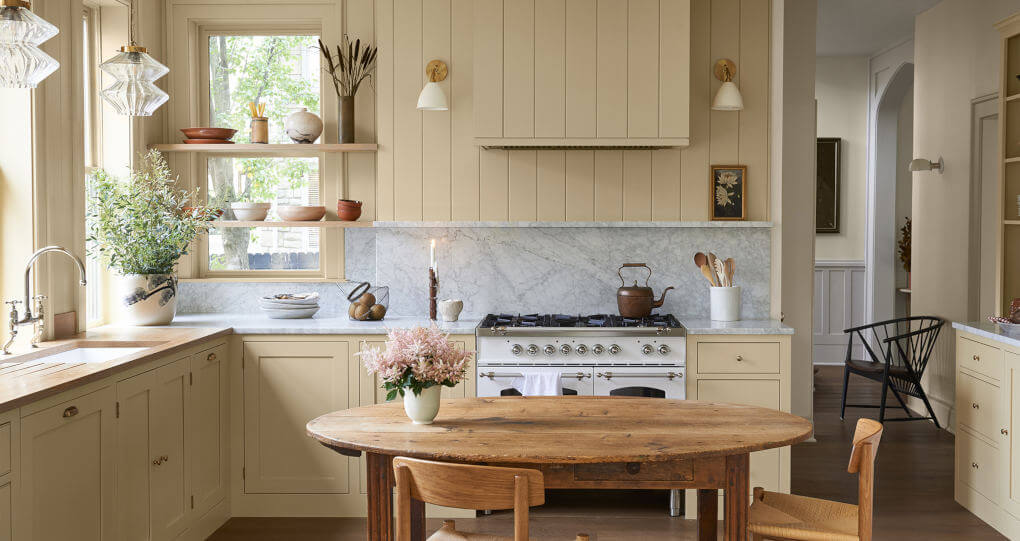
Fresh finish options are also playing a big role in the kitchen’s latest transformation, with many appliance makers moving beyond the usual, Darth Vader-like black oven to experiment with a softer palette. Indeed, Miele announced that “Pearl Beige is the new Black,” while Whirlpool showcased its line in a creamy new hue of its own. (This trend was not limited to kitchen appliances. Over in Hall 22, Technogym launched its Sand Stone collection, which reimagines home fitness equipment in soft, latte-like tones.)


Of course, making a kitchen look more like a calming spa is not, on its own, enough to alleviate the stress of constant meal prep. To successfully reinvent the cucina as a bathhouse-like sanctuary, manufacturers also need to help people keep their kitchens looking fresh. Knowing that, Miele ran impressive demos of the HydroClean function built into its steam ovens, drawing crowds to watch what looked like a car wash in miniature. A few booths over, Bosch introduced us to the “world’s first invisible cleaning robot,” which is basically just a robot vacuum that docks directly underneath your sink.

During hectic weeknights, it can be all too easy to feel like cooking is out of the question. But a lot of the time, chopping and sautéing some vegetables actually end up being great ways to reduce stress. Perhaps, a spa-like kitchen that reminds people of the calming power of cooking (and better anticipates the dreaded cleanup that waits at the end of mealtime) is just what someone needs to rediscover the joys of food prep.
Right now, Goop Kitchen (which recently expanded to NYC from LA, where it has enjoyed great success) is turning takeout into the next wellness frontier. But at EuroCucina 2026, kitchen manufacturers were eager to remind fairgoers that there’s no greater mental balm than a home-cooked meal. Done right, dinner in can be just as refreshing and restorative as a hydrotherapy circuit — and that’s true whether your kitchen looks like a spa or not.
The post We’re Used to Thinking About the Kitchen As a Machine. What If It Became More Like a Spa? appeared first on Azure Magazine.