Kew Gardens in Southwest London hosts the largest and most diverse botanical and mycological collections in the world, as home to more than 50,000 species. A UNESCO World Heritage Site, the monumental, 121-hectare landscape requires considerable resources to maintain — not least of which is water, especially as the world grows increasingly warmer. Case in point: a summer 2022 drought resulted in the loss of over 400 trees at Kew.
It prompted a horticultural rethink. Perhaps, researchers suggested, a continued hyperfocus on native species would be misguided in the context of climate change, which will undoubtedly require constant adaptation. And so, they set out to determine which tree species they needed to plant now to protect Kew Gardens for future generations (the resulting report, “Planting for the Future: Kew’s Landscape Succession Plan,” has been shared with horticulturists and urban planners to act as a blueprint for other spaces).
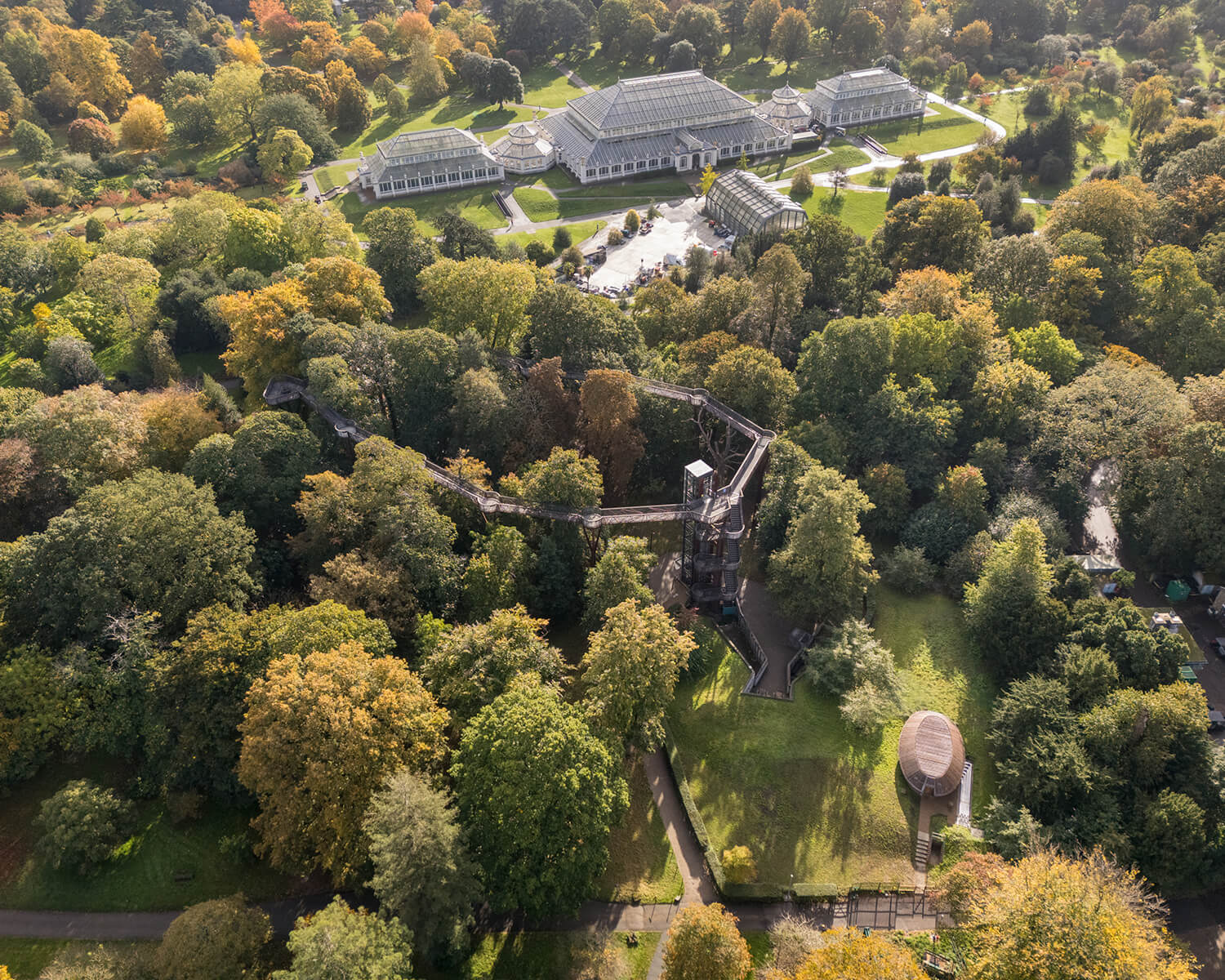
The 2022 drought was also a wake-up call to reconsider existing infrastructure. The gardens could no longer rely solely on the water mains that previously sustained them. In turn, the institution tapped Hugh Broughton Architects to design a pump house that would distribute 280,000 litres of irrigation water stored in a subterranean water tank, ensuring continued water security across the gardens.
“The new pump house at Kew marks a significant step forward in our irrigation infrastructure development. Having a reliable and efficient pumping system to distribute the water stored in our underground tank is an essential element for our landscape resilience,” says Richard Barley, Kew’s director of gardens. “In the future, by adding harvested rainwater, we will be able to reduce our reliance on mains water, ensuring that our gardens thrive while we work in harmony with nature. This will not only preserve precious resources but also set a new standard for environmental stewardship in horticulture at Kew.” These goals are in line with the institution’s ambitious target to be climate-positive by 2030.
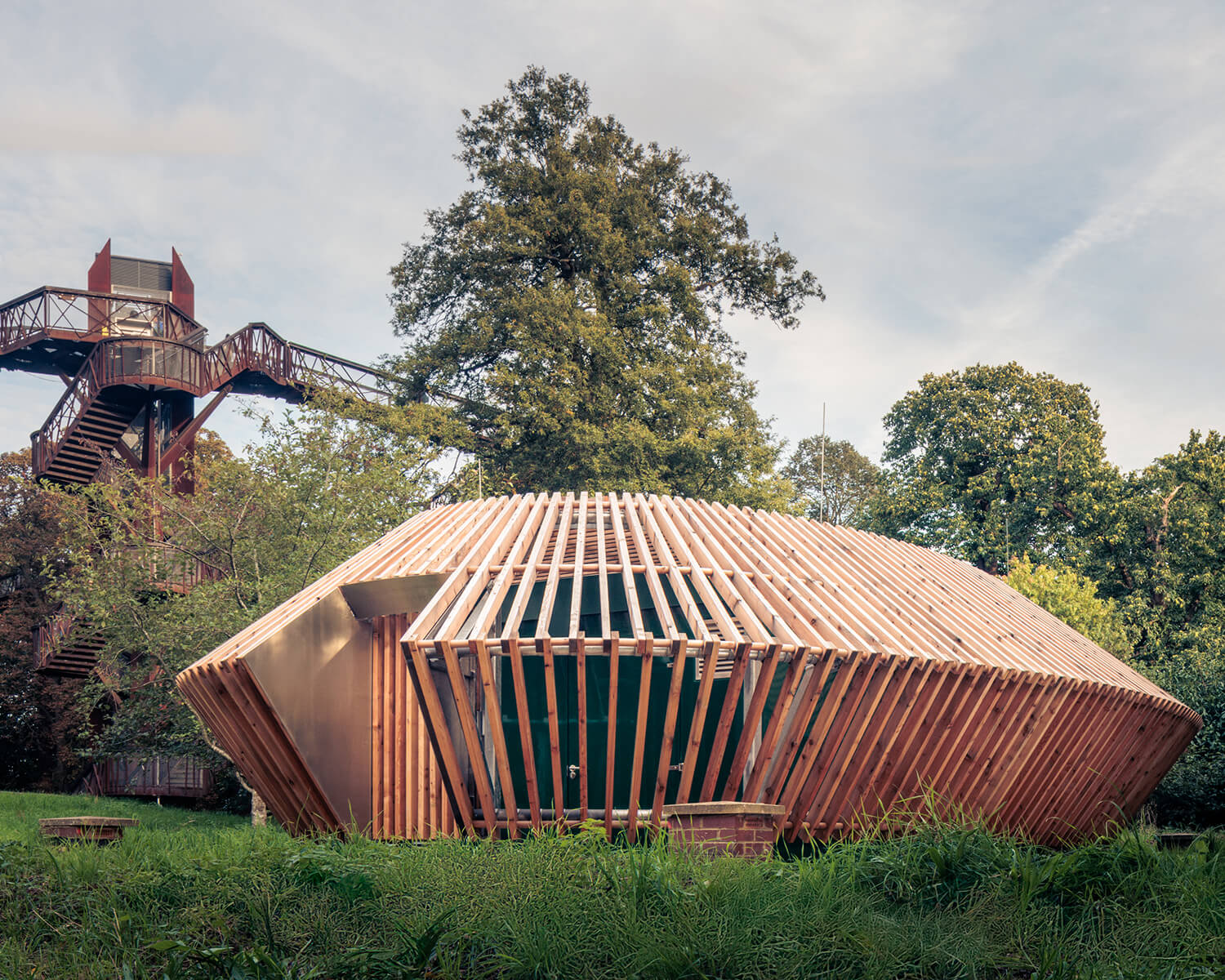
The designers had big shoes to fill. Opened in 1759, Kew Gardens boasts a long history of architectural excellence: John Pawson designed the elegant granite and bronze Lake Crossing bridge in 2006 with Buro Happold, and Marks Barfield (of London Eye fame) designed the iconic weathered steel Treetop Walkway that hovers 18 metres above the new pumphouse — not to mention several Victorian-era structures on site, including The Temperate House, the world’s largest surviving Victorian glass structure.
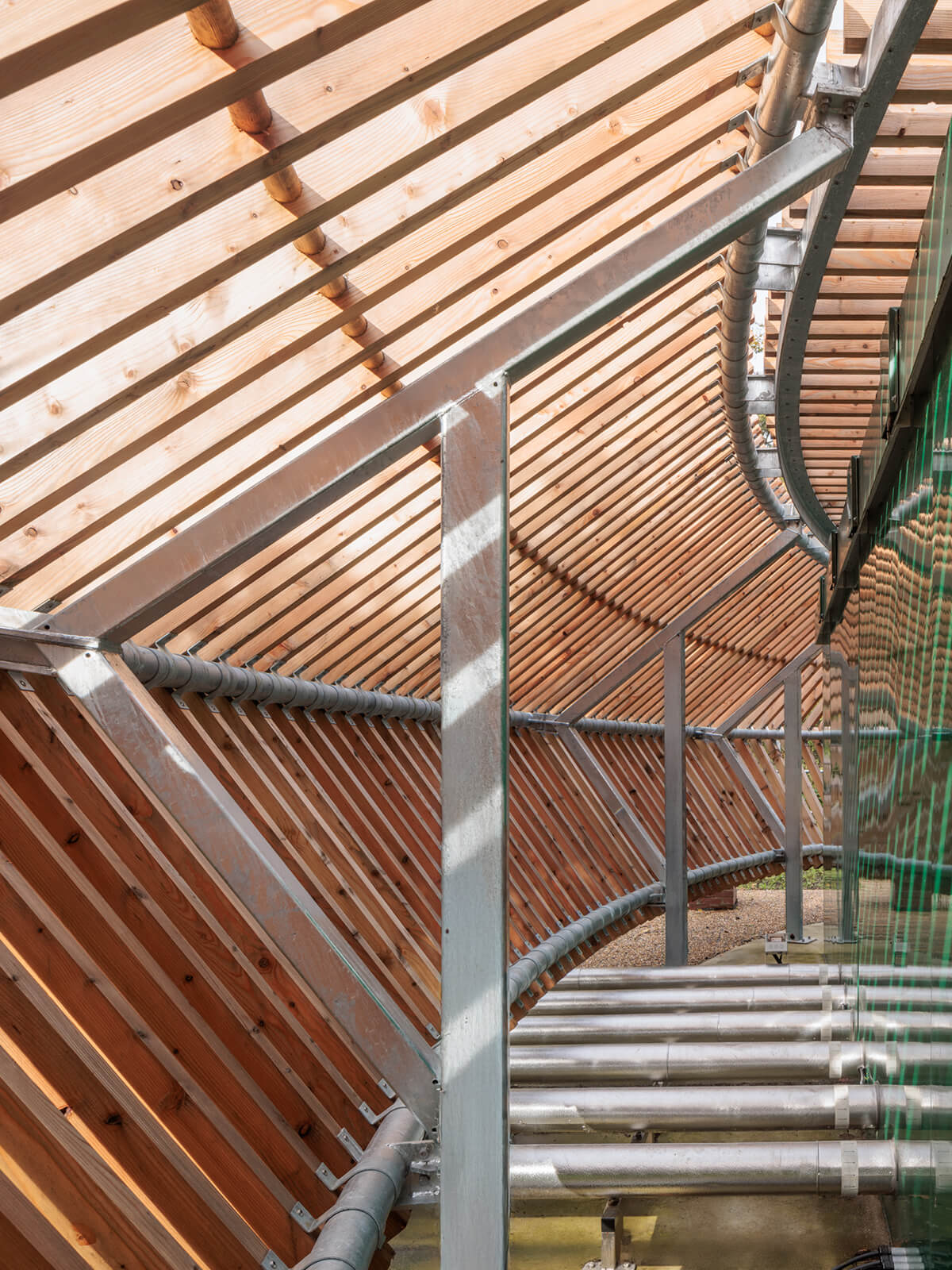
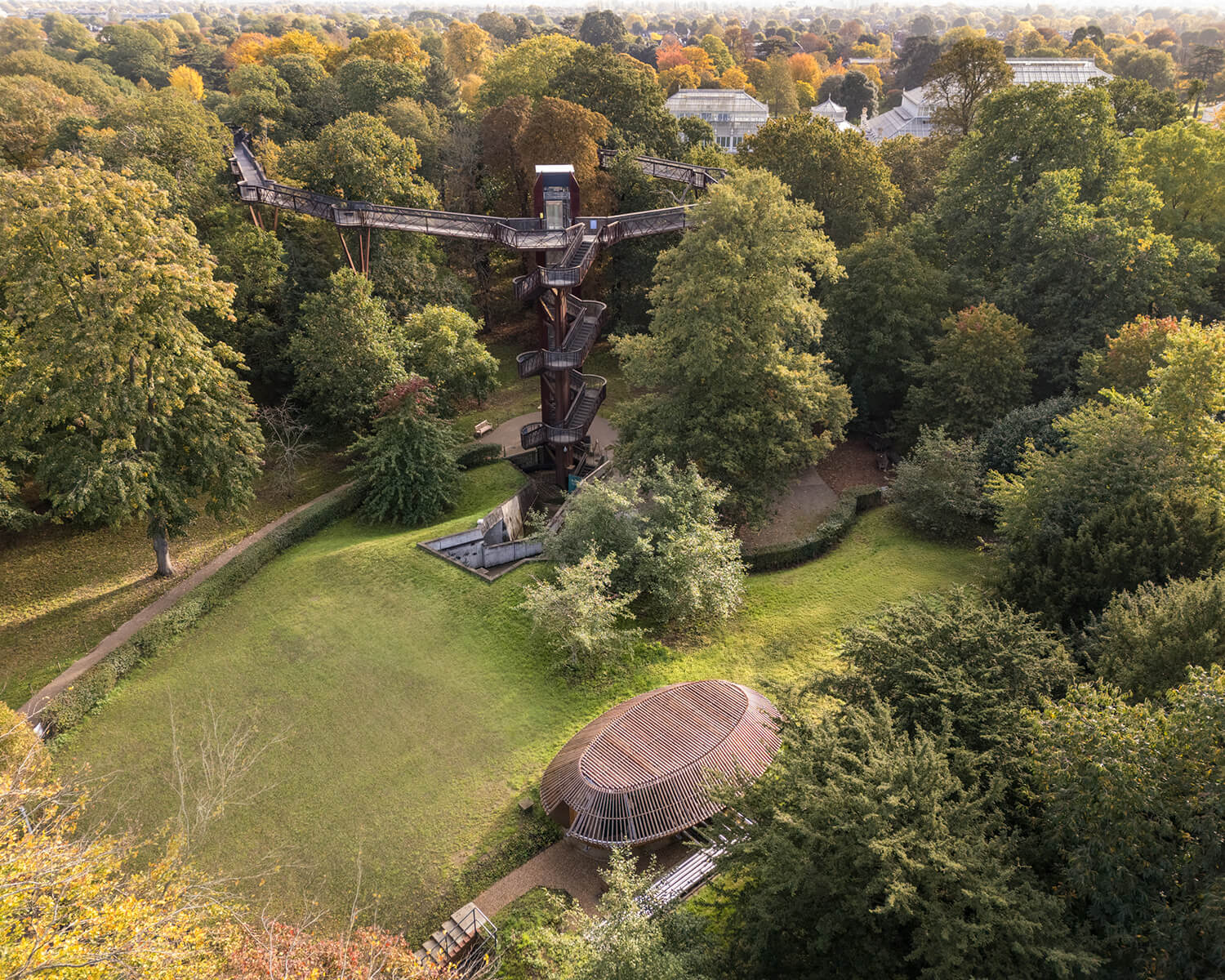
With the Kew Pumping Station, Hugh Broughton has introduced a new material — and architectural language — to the gardens. Drawing inspiration from a variety of plants in Kew’s living collections, the firm conceived the filigree timber structure (engineered by Stantec with help from timber specialists Xylotek) as a fallen leaf or palm frond that elegantly encloses the machinery, acting as a screen that carefully conceals it from view.
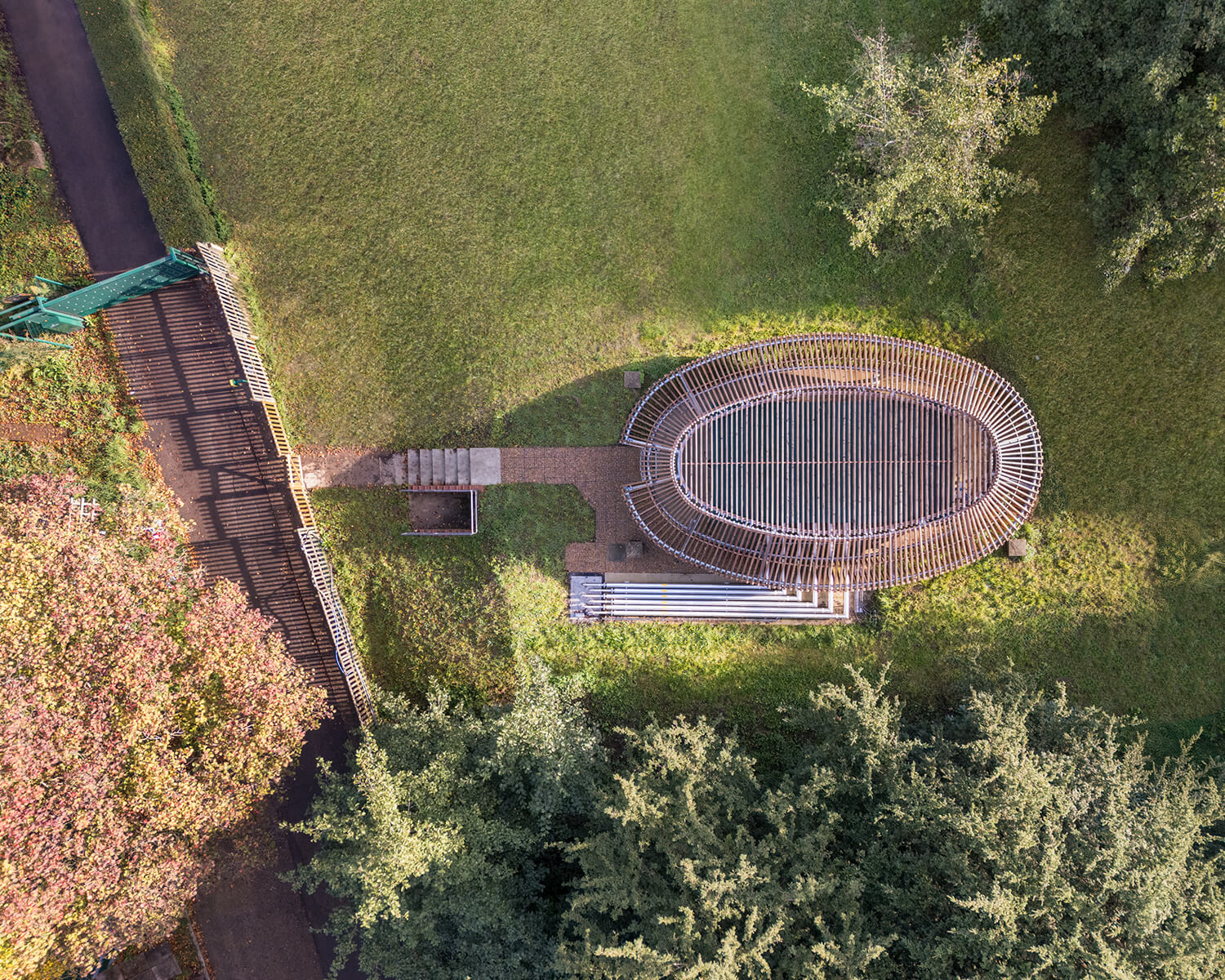
The architects conducted dozens of sketch studies of plant life and used 3D digital modelling to hone the sculptural design. Through this process, they developed the final iteration, an oval-shaped plan made of interlocking modular struts. The structure mimics those found in nature, while also following the tradition of engineering innovation that has defined many of Kew’s noteworthy architecture projects.
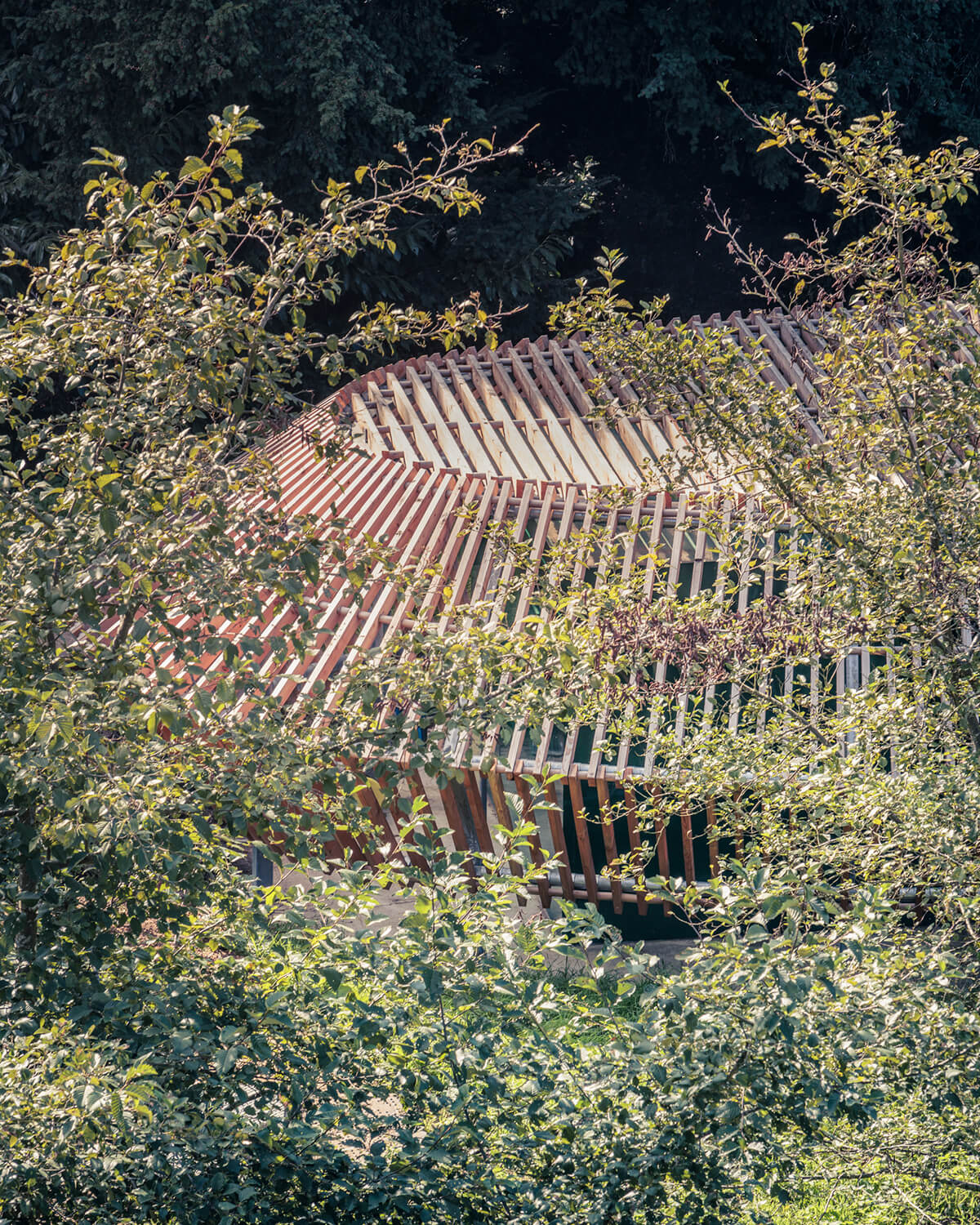
The natural European larch fits seamlessly into its verdant surroundings but was also selected for the silver patina it will develop over time, eventually camouflaging it amongst the dappled light and shadows of the foliage. Conceived as the “heartbeat” of the irrigation network, the new pump house will ensure that Kew Gardens remains a thriving landscape for years to come.
The post A New Pumphouse Merges Form and Function at London’s Kew Gardens appeared first on Azure Magazine.